
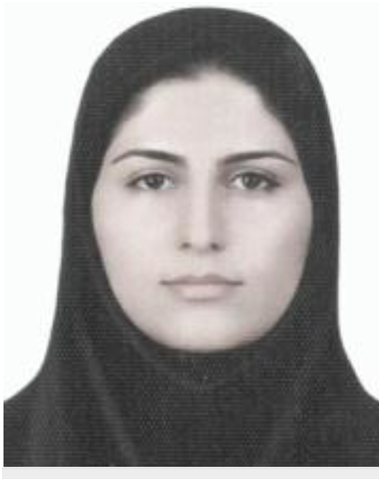
Department of Polymerization
Polymer Engineering
Polymer Engineering, Tarbiat Modares University, Tehran, Iran
Research field:
Expert:
Phone:
Address:
Maral Ghahramani was born in 1989 in Shiraz, Fars province. She received her Ph.D. in Polymer Engineering in 2018 from Tarbiat Modares University. After completing a Postdoctoral Fellowship Program at the Amirkabir University of Technology, since 2020, she has been working as an assistant professor in the Polymer Reaction Engineering (Polymerization) department at the Faculty of Chemical Engineering, Tarbiat Modares University. Her research interests are targeted design and synthesis of (co)polymers for lithium-Ion batteries, controlled self-assembly of block copolymers, and renewable energies applications .
Gel polymer electrolyte (GPE) membranes containing poly(vinylidene fluoride) (PVDF), PVDF/SiO2-g-poly(methyl methacrylate) (PMMA) and PVDF/SiO2-g-p(methyl methacrylate-co-hydroxyl ethyl methacrylate) (PMMA-co-HEMA) organic-inorganic hybrid nanoparticles were prepared by phase inversion method, in which PMMA and P(MMA-co-HEMA) were successfully grafted onto the surface of SiO2 nanoparticles by the atom transfer radical polymerization method. The structure and properties of the membranes were characterized using the Fourier transform infrared spectroscopy (FT-IR), 1H nuclear magnetic resonance (1H NMR), thermal gravimetric analysis (TGA), differential scanning calorimetry (DSC) and scanning electron microscopy (SEM) techniques. In addition, t
The structure-property relationship of the poly(alkyl (meth)acrylate)-b-poly(dimethyl siloxane) (PA-b-PDMS) triblock copolymers were studied for membrane application. The effect of PA segments with different main-chain flexibility and side chains such as poly(benzyl methacrylate) (PBzMA), poly(ethyl methacrylate) (PEMA) and poly(methyl acrylate) (PMA) were studied on the properties of PA-b-PDMS block copolymer membranes. The block copolymers were synthesized via atom transfer radical polymerization (ATRP). The morphology structure of the synthesized block copolymers was changed from spherical to the cylindrical type by changing the structural segments from PMA and P(EMA-b-PEMA) to PEMA, respectively. The morphological feature of the PA-b-PD
The correlation between the surface energy and thermal stability of polymers plays an important role in engineering of plastic materials. In this work, microstructural characteristics of copolymers of poly(dimethyl siloxane) with benzyl methacrylate, ethyl methacrylate, and methyl acrylate are correlated with their surface energy and thermal stability. The poly(dimethyl siloxane) segments in the copolymer chains affected the hydrophobic behavior. The surface energy of the synthesized copolymers decreased by increasing segments of alkyl methacrylates. The thermal stability of copolymers suggesting that heat resistance of poly(dimethyl siloxane) copolymers used in this correlation can be improved by adjusting the units of alkyl methacrylates
Atom transfer radical polymerization (ATRP) of ethyl methacrylate (EMA) was carried out at 80??C using poly(dimethyl siloxane) (PDMS) bifunctional macroinitiator, copper chloride (CuCl) catalyst, and N, N, N′, N″, N″-penta methyl diethyl triamine (PMDETA) ligand in toluene solvent. The final microstructure and kinetic of polymerization of the PEMA-b-PDMS-b-PEMA block copolymer were analyzed by 1H-NMR, FT-IR and gel permeation chromatography (GPC) techniques. The effect of solvent on self-assembly and morphology of PEMA-b-PDMS-b-PEMA triblock copolymer is reported. Intrinsic viscosity measurements, UV absorption and thermodynamic properties evaluations were indicated that certain interactions existed between this block c
Development of advanced technologies for metal plating wastewater treatment constitutes one of the major fields of research, primarily driven by the progressive environmental regulations issued to address the concerns. The emergence of various membrane-based processes and the satisfactory trial and field tests have created new avenues for minimization of the negative impacts caused by the uncontrolled discharge of metal plating waste streams. On the other hand, the progress in the polymer science and engineering provides opportunities for development of membrane materials with advanced functionalities and superior characteristics that can effectively be employed for design and fabrication of high performance membranes. The present review pr
Emulsion polymerization of the butadiene (Bu) was performed in the presence of disproportionate potassium rosinate (DPR) as anionic emulsifier, potassium hydroxide (KOH), and potassium carbonate (K2CO3) as electrolytes, and three different initiators including potassium persulfate (KPS), 2,2′-azobisisobutyronitrile (AIBN) or 4,4′-azobis(4-cyanovaleric acid) (ACVA, also known as VAZO) at 70??C. Latexes were prepared with a solid content of about 30 wt%. The particle size and its distribution were measured by dynamic light scattering (DLS) analysis, while the polymerization conversion was determined gravimetrically at different time intervals. Results on the emulsion polymerization of Bu in the presence of KOH and K2CO3 co-
Poly(methyl acrylate)-poly(dimethyl siloxane)-poly(methyl acrylate) (PMA-PDMS-PMA) and poly(methyl methacrylate)-poly(dimethyl siloxane)-poly(methyl methacrylate) (PMMA-PDMS-PMMA) triblock copolymers were synthesized with atom transfer radical polymerization technique. Thermodynamic properties of block copolymer solutions were investigated. Solubility parameter differences and Flory-Huggins interaction parameters of block copolymer-solvent systems were evaluated for the membrane application. Morphology study indicated cylindrical micelles of PDMS block copolymers. X-Ray analysis confirmed phase separated morphology of PDMS block copolymers in bulk. The effect of polyvinyl acetate (PVAc) on the morphology and its effect on the
Homo‐ and copolymers of vinyl esters including vinyl acetate (VAc) and vinyl benzoate (VBz) were synthesized via the reverse iodine transfer radical polymerization technique. Polymerization was carried out in the presence of iodine as the in situ generator of the transfer agent and 2,2′‐azobis(isobutyronitrile) as the initiator at 70 ?C. Reverse iodine transfer radical homopolymerization of VAc and VBz led to conversions of 76 and 57%, number‐average molecular weights of 8266 and 9814 g mol−1 and molecular weight distributions of 1.58 and 1.49, respectively. The microstructure of the synthesized polymers was investigated in detail using gel permeation chromatography, 1H NMR, 13C NMR and distortionless enhancement of polariz
Thermodynamic stability of polymer-solvent and polymer-solvent-nonsolvent mixtures is of great importance in membrane manufacturing. It plays an important role in understanding the membrane formation techniques. The Flory-Huggins theory has been used for determining the phase equilibrium of the binary (polymer/solvent) and ternary (polymer/solvent/nonsolvent) mixtures. In this paper, we are investigating the effects of binary interaction parameters in phase equilibrium and solubility of ternary and binary mixtures. Hansen solubility parameters have been incorporated in to the Flory-Huggins model for poly (methyl acrylate)-poly (dimethyl siloxane)-poly (methyl acrylate) triblock copolymer/dichloromethane binary mixture; binary interaction pa
no record found