Perspective
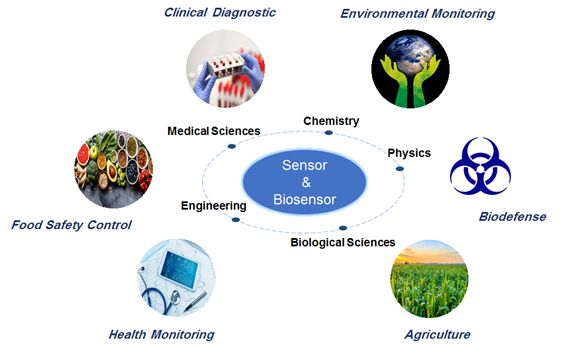
Nowadays, sensors are recognized as a vital and necessary part of various measurement and control systems. Sensors are devices that detect a measurable quantity and convert this quantity into a readable signal. Biosensors are integrated receptor-transducer devices that provide quantitative or semi-quantitative analytical information using a biological recognition element. Sensors and biosensors have widespread applications in various fields such as environmental monitoring, sanitation and health, agriculture, food safety control, biodefence and clinical diagnostics. Therefore, the development of accurate and reliable sensors and biosensors with high sensitivity, low cost and portability has attracted a great deal of attention of many researching groups.
The increasing prevalence of infectious and chronic diseases as well as various cancers, rising investment in the discovery of new drugs, stringent environmental regulation, growth of smart agriculture and expansion of the food processing industry are the key parameters governing the growth of global biosensors market. The biosensors are extensively used in healthcare applications such as blood glucose monitoring and measurement, cholesterol monitoring, pregnancy test and identifying the effect of drugs. The adoption of biosensors is gaining momentum in other applications such as measuring toxins and microbial contamination in food products, soil chemical and biological contaminants detection, and monitoring pollutants in air and water. Increasing awareness in various countries is anticipated to lead to the growth of the biosensors market in coming years.
Development in nanotechnology is revolutionizing the biosensors market across the world. Application of nanostructures in sensing platforms leads to miniaturization, simultaneous multianalysis, increment of detection sensitivity and reduction of cost and the required specimen amount.
The research within the sensor and biosensor field requires an interdisciplinary approach and converging collaboration that involves different branches of science such as medicine, biology, physics, chemistry and engineering. Accordingly, the sensor and biosensor group in Tarbiat Modares University (TMU) has been established in 2018 with the cooperation of specialists from different scientific fields in the Faculty of Interdisciplinary Sciences and Technologies to conduct researches with product-oriented missions.
Aims
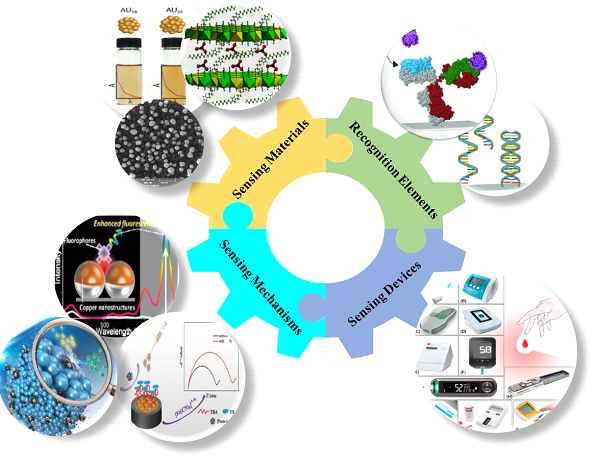
Implementing innovative solutions in the design and fabrication of sensors and biosensors, especially with the use of nanomaterials as well as the integration of the diagnostic process in the form of the electronic systems, is the main aim of the sensor and biosensor group. Accordingly, pathogens and biomarkers identification, production of biorecognition elements and design and fabrication of various sensing platforms are the most important activities of the group. Accordingly, the main executive programs of the sensor and biosensor group are as follows:
- Production of biorecognition elements (Antibody/Aptamer) for applying in various sensing platforms
- Development of various sensing platforms by using nanotechnology and microfluidic technology with implementing required electronics.
- Development and fabrication of portable biosensors for on-site and early diagnosis purposes
Missions
- Collaboration and cooperation of specialists of various fields to train Master and PhD students in the field of sensor and biosensor
- Executing innovative researches toward the national priorities in the field of sensor and biosensor
- Holding national and international workshops in the field of sensor and biosensor
- Fabrication of various sensor and biosensor prototypes and developing the industrial sample and starting up the commercialization processes
- Performing researches at the cutting-edge of the sensor field in addition to developing new technologies in the sensor and biosensor field
- Generating knowledge-based startups regarding the technology outcomes of the sensor and biosensor group
Master Research Plans
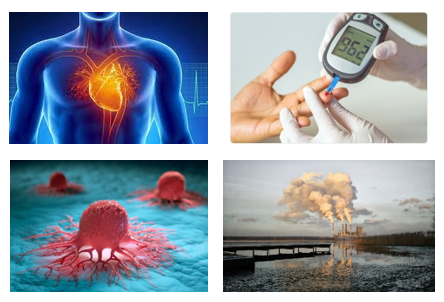
Advancement in biosensors technology is one of the major factors rising the popularity of the smart diagnostic devices. Over the past decades, rising of the number of heart diseases and diabetic patients has resulted in a significant increment in the adoption of advanced devices for disease diagnosing and monitoring of health status and the treatment process too.
On the other hand, early detection of cancer, as the second leading cause of death in the world, is very important. The development of biosensor-based early diagnostic methods, in addition to reducing cancer mortality, lead to the reduction of health costs imposed on various countries.
In addition, the increasing environmental pollution with particular reference to emerging contaminants, toxic heavy elements, and other hazardous agents is a serious concern worldwide. Considering such global dilemma, there is an urgent need to design and develop strategic measurement techniques with higher efficacy and precision to detect a broader spectrum of numerous contaminants.
Accordingly, the master plans of the sensor and biosensors group are considered as follows:
- Fabrication of sensors for heart disease diagnosing with the ability to measuring relevant biomarkers (Troponin, D-Dimer, pro-bNP, CTN1)
- Fabrication of diabetes control associated sensors
- Fabrication of sensors for early detection of ovarian and prostate cancers by measuring relevant biomarkers (CA125 & PSA)
- Fabrication of sensors for detection and quantification of metal ions (Pb, Hg, As, Cd)
- Fabrication of sensors for detection and subsequent removal of colored organic pharmaceutical contaminants
Plans
- Fabrication and development of optical, chemical and electrochemical transducers
- Development of chemical and biological recognition elements and integration of them in new transducer materials
- Synthesis of nanostructures, nanocomposites and polymeric nanoparticles to apply in various sensing platforms
- Applying industrial production methods such as screen-printing, electrodeposition and lithography in the fabrication of sensing platforms
- Immobilization of chemical and biological recognition elements on sensing platforms
Interdisciplinary Faculty Members
- Dr. Nader Alizadeh Motlagh, Professor, Faculty of Basic Sciences, Department of Analytical Chemistry
- Dr. Mohammad Javad Rasaee, Professor, Faculty of Medical Sciences, Department of Medical Biochemistry
- Dr. Alireza Mahjoub, Professor, Faculty of Basic Sciences, Department of Inorganic Chemistry
- Dr. Ahmad Moshaii, Associate Professor, Faculty of Basic Sciences, Department of Atomic Molecular Physics, (Head of the group)
- Dr. Mayam Nikkhah, Associate Professor, Faculty of Biological Sciences, Department of NanoBiotechnology
- Dr. Sara Darbari, Associate Professor, Faculty of Electrical & Computer Engineering, Department of Electronics
- Dr. Sara Abbasian, Faculty of Interdisciplinary Sciences and Technologies, Department of Sensor and Biosensor, (Group coordinator)
|


